

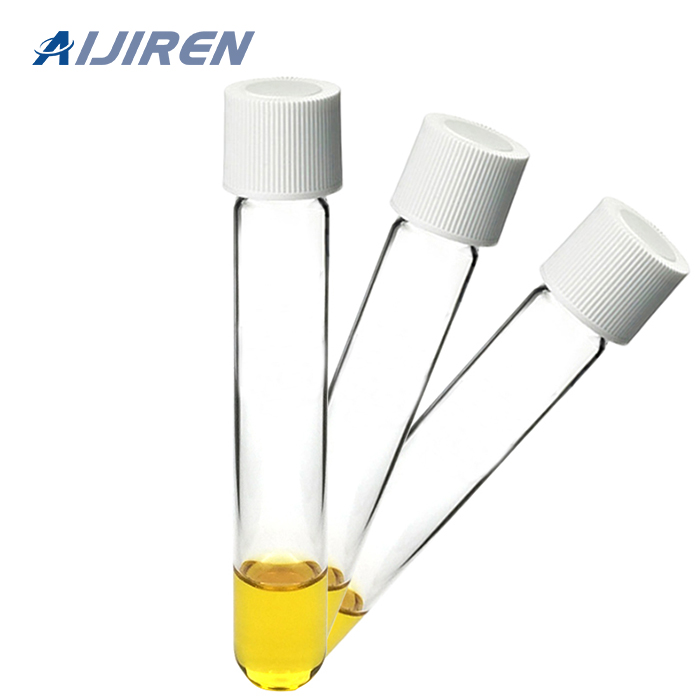
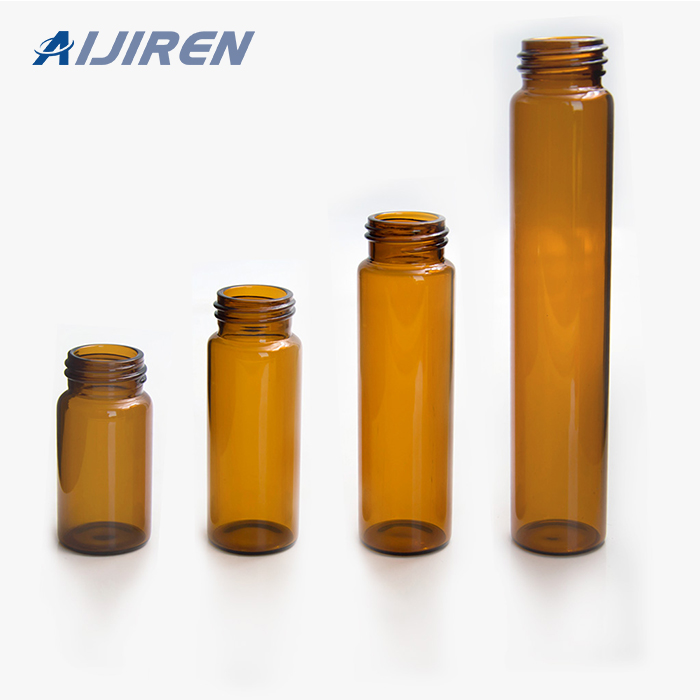
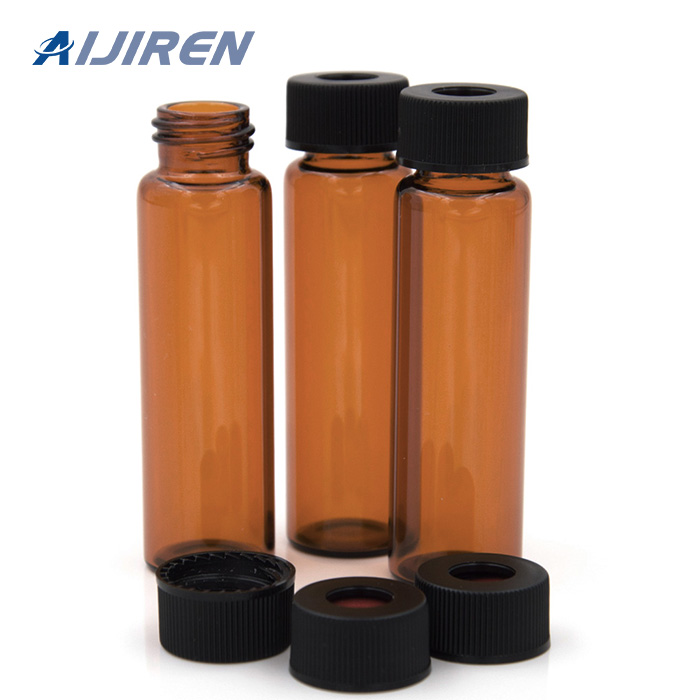
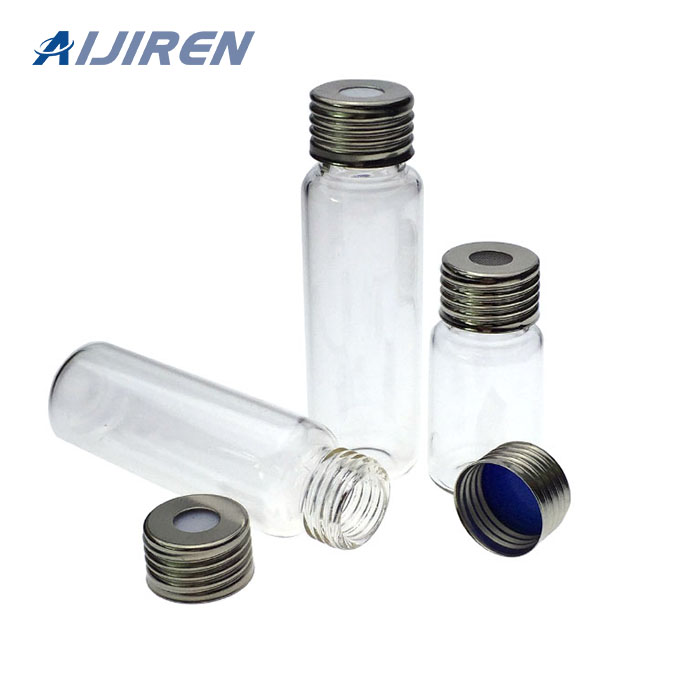
A 40 mL volatile organic analysis (VOA) vial arrived at my bench with 31% of its septum face covered in punctures, and the auditor sitting next to me asked one question: “Show me the lot’s closure certificate and the septum puncture log for that sample set.” We had the certificate. We did not have the log. That single missing page triggered a 12-day response cycle and a re-analysis of 22 samples under EPA Method 8260C. If you run environmental samples under SW-846, the EPA method requirements for vial closures and auditor expectations are not a paperwork afterthought, they are the first thing checked and the last thing closed.
This is not a piece about what a vial closure is. It assumes you already buy septa by the thousand and know a PTFE-faced silicone when you see one. What follows is the audit-facing layer: what the methods actually say about containers and handling, how a compliance officer reads your closure documentation, and where the failure modes hide that a method reference alone will not catch.
SW-846 is a guidance compendium, not a regulation, and that distinction matters during an audit. The methods inside it (8260C for volatiles, 8270E for semivolatiles, 8081B for organochlorine pesticides, 3510C/3520C for extraction) specify container type, preservation, and holding time. They do not, in most cases, specify septum material, liner thickness, or closure torque. That silence is exactly where auditors probe, because the method says “container” and the auditor wants to know what your container was made of and how you proved it did not contribute to the result.
The relevant language in Method 8260C and its extraction cousins points to amber glass, a PTFE-lined closure, and zero headspace for volatile work. Method 5030/5035 (purge-and-trap and closed-system purge-and-trap) is where the closure becomes load-bearing: closed-system purge-and-trap requires a sealed VOA vial with a septum that survives the transfer to the purge vessel without leaking or shedding. If your septum cores during that transfer, you have injected silicone particles into a system calibrated for parts-per-billion volatiles. The method does not tell you the septum must be 3 mm thick with a 0.060 in PTFE face. Your validation data has to make that argument for you.
I keep a copy of the current SW-846 methods (U.S. EPA SW-846 test methods for waste and materials) bookmarked next to the closure spec sheets, because the audit conversation always starts with the method text and ends with the spec sheet. The gap between them is your quality system.
Container requirements by method family
The table below is the working reference I hand to new analysts. It is not exhaustive, but it covers the container and closure expectations that show up in 90% of the audits I have sat through.
| Method family | Container | Closure expectation | Headspace / handling | Holding time |
|---|---|---|---|---|
| 8260C (VOA) | 40 mL amber glass, screw top | PTFE-faced silicone septum, open-top cap | Zero headspace, no air bubble >6 mm | 14 days preserved (HCl, pH <2), 7 days if unpreserved |
| 8270E (SVOA) | 1 L amber glass | PTFE-lined screw cap | Minimal headspace, cool 4 °C | 7 days to extraction, 40 days to analysis |
| 8081B (pesticides) | 1 L amber glass | PTFE-lined cap | Cool 4 °C | 7 days to extraction, 40 days to analysis |
| 3510C / 3520C (extraction) | 1 L or 2 L amber glass | PTFE-lined cap, no plastic contact | Cool 4 °C, dark | Per parent method |
| 5035 (closed-system purge-and-trap) | 40 mL VOA vial, pre-weighed | Septum rated for transfer puncture, <2 punctures | Sealed at collection, no re-opening | 14 days preserved, 48 h for some analytes |
Notice the 5035 row. That is the one that bites. A septum rated for a single transfer puncture is not the same product as a septum rated for autosampler use, and mixing them across a sample set is a finding waiting to happen.
The paperwork an auditor asks for first, in the order they ask
I have watched four EPA compliance inspections and two state-level audits of environmental labs. The document request list is remarkably consistent. The closure-related items come up in this order, and the first three are usually what determine whether the audit stays a desk review or escalates.
1. The certificate of analysis, matched to the lot on the bench
The auditor wants the CoA for the specific lot number of septa and caps in use, not the general product datasheet. If your CoA lists “silicone, PTFE-faced” with no lot-specific dimensional data, you have a gap. What I want on a closure CoA: durometer (Shore A, typically 45 to 55 for VOA septa), PTFE face thickness (0.060 in nominal, tolerance ±0.005 in), septum diameter (typically 20 mm for 40 mL vials, 22 mm for 1 L), and a statement of extractables screening. If the CoA is missing the durometer, ask the supplier for the batch record. Auditors do.
2. The septum puncture log or usage record
This is the document that was missing in my opening scene, and it is the one auditors ask for most often after the CoA. The expectation, drawn from method handling language and reinforced by data integrity rules, is that you can show how many times each septum was punctured before the sample was analyzed. For autosampler work, a septum is typically retired after 50 to 100 punctures depending on needle gauge; for manual VOA transfer, after 1 to 2 punctures. If you cannot produce a log, the auditor assumes the worst case and asks you to demonstrate that coring did not occur. That demonstration costs a re-analysis.
3. The closure compatibility statement
A short document, ideally one page, that states which closure is used with which method and why. It should name the septum material, the liner, the cap type (open-top vs. closed-top), and the torque applied. Auditors are not looking for a novel. They are looking for evidence that someone thought about it. A compatibility statement that says “PTFE-faced silicone, 3 mm, open-top cap, hand-tightened to 15 to 20 in-lb” tells the auditor you have a controlled process.
4. The training record for closure handling
Who tightens the caps, and were they trained to a torque value? If your answer is “everyone just tightens them until they feel right,” you have a variability finding. Hand torque varies by 40% between analysts in my experience. A torque screwdriver set to 15 to 20 in-lb for 40 mL VOA vials removes that variable and gives the auditor a number to write down.
Where closure failures actually show up in the data, and the measurements that catch them
Auditors read data. If your closure is failing, the failure appears in the chromatogram before it appears in a document. Here are the two field cases that taught me to instrument the closure, not just inspect it.
Field case 1: the silicone bleed that looked like a calibration drift
Symptom: A 8260C run on a set of 40 mL VOA vials showed a rising baseline and a cluster of siloxane peaks (m/z 73, 147, 207, 281) appearing in blanks and samples alike, with a retention time window around 8 to 12 minutes. The analyst initially blamed the column.
Measurement that identified it: We ran a septum blank: a clean VOA vial sealed with the suspect lot, heated to 60 °C for 30 minutes, then analyzed by purge-and-trap. The septum blank showed siloxane response at 3.2× the method detection limit. The column blank was clean. The lot’s CoA showed a durometer of 38 Shore A, below the 45 to 55 range we specified. The softer compound was shedding.
Fix: We rejected the lot, moved to a supplier who could provide lot-specific durometer, and added a septum blank to the monthly QC schedule. The siloxane peaks disappeared. The lesson: a closure failure can masquerade as an instrument problem, and the only way to separate them is a closure-specific blank.
Field case 2: the torque that leaked at 4 °C but not at 22 °C
Symptom: A batch of 1 L amber glass semivolatile samples showed low recoveries for volatile analytes in the 8270E prep, but only for samples stored in the walk-in cooler. Room-temperature samples were fine.
Measurement that identified it: We pressure-tested 30 capped bottles at 4 °C and 22 °C using a simple headspace pressure decay method. At 22 °C, all 30 held. At 4 °C, 7 of 30 showed measurable pressure loss over 24 hours. The caps had been hand-tightened to an average of 11 in-lb (measured with a torque wrench after the fact), and the PTFE liner was 0.030 in thick, thinner than the 0.060 in we specified. The combination of thin liner and low torque let the seal relax at low temperature.
Fix: We standardized to 0.060 in PTFE liners, set a torque spec of 20 in-lb for 1 L bottles, and added a 4 °C pressure-decay check to incoming inspection for each lot. The low-recovery problem stopped.
The closure specification that survives an audit
If I had to write the closure spec sheet that an auditor would accept without a follow-up question, it would read like this. Use it as a template and fill in your own lot data.
- Septum material: PTFE-faced silicone, 45 to 55 Shore A durometer, 0.060 in PTFE face, 3 mm total thickness for VOA septa.
- Dimensions: 20 mm diameter for 40 mL vials, 22 mm for 1 L bottles, tolerance ±0.5 mm.
- Cap type: open-top screw cap for VOA (allows needle access without removing the cap), closed-top for storage-only.
- Torque: 15 to 20 in-lb for 40 mL vials, 20 in-lb for 1 L bottles, applied with a calibrated torque screwdriver.
- Puncture rating: 1 to 2 punctures for manual VOA transfer, 50 to 100 for autosampler use, logged per septum.
- Temperature rating: continuous service to 200 °C for silicone, PTFE face to 260 °C; verify against your autosampler oven profile.
- Extractables: lot-specific septum blank below method detection limit for target analytes.
- CoA content: lot number, durometer, liner thickness, diameter, extractables screening result, date of manufacture.
That spec sheet is the document that closes the gap between the method’s silence and the auditor’s question. It is also the document that lets you buy with confidence from a supplier who can meet it. If you are sourcing closures and want the specification language in a form you can paste into a purchase order, the team at Vial Closures maintains a library of closure specs keyed to SW-846 method families.
How the closure interacts with the analytical system, and why the auditor cares
The auditor is not a chromatographer, but the auditor has read enough 8260C data to know that a closure problem produces a specific fingerprint. The interaction between closure and instrument is where the EPA method requirements for vial closures and auditor expectations converge, because the method assumes a clean transfer and the instrument assumes a clean injection.
If you run closed-system purge-and-trap, the septum is punctured by the transfer needle at the purge vessel. A septum that cores at that moment sends particles into the trap, and the trap sends them to the column. The symptom is a shift in retention time and a loss of response for late-eluting analytes. If you run headspace, the septum is punctured by the autosampler needle, and a cored septum shows up as a pressure fault or a needle blockage. Either way, the auditor sees the data and asks about the closure. The fix is a septum rated for the puncture count and a log that proves you stayed under it.
I keep a copy of the Restek technical resources for chromatography on the bench for the septum and liner compatibility charts, and I cross-check against the Agilent chromatography consumables and columns guidance when I am matching a septum to a specific autosampler. The Thermo Fisher chromatography and sample handling documentation is also useful for the transfer-needle dimensions that determine puncture rating. None of these sources will write your closure spec, but they will tell you what the instrument expects.
For the analytical side of the workflow, the team at Analytical Testing runs the method validation that turns a closure spec into a defensible data package. And when you are matching a closure to a specific chromatography vial or HPLC vial format, the dimensional tolerances have to line up or the septum will not seat.
Troubleshooting checklist for the week before an audit
Run this checklist 30 days out. It takes an afternoon and it catches the findings that would otherwise cost you a re-analysis.
- Match CoAs to bench lots. Pull every closure lot in the cabinet and confirm a lot-specific CoA exists with durometer and liner thickness. Flag any that do not.
- Audit the puncture log. For the last 90 days of 8260C samples, confirm each septum has a logged puncture count. Gaps become findings.
- Verify torque calibration. Check the torque screwdriver against a reference standard. A screwdriver that reads 5 in-lb low will fail 20% of your caps.
- Run a septum blank. One clean vial, suspect lot, heated to 60 °C for 30 minutes, analyzed by purge-and-trap. Siloxane response above MDL is a reject.
- Check the 4 °C seal. Pressure-decay test 10 capped bottles from each lot at 4 °C for 24 hours. Any measurable loss is a lot hold.
- Confirm the compatibility statement is current. It should name the method, the closure, and the torque. If it is older than the last method revision, update it.
- Pull training records. Every analyst who caps a vial should have a signed record showing they were trained to the torque spec and the puncture log.
What to do when the auditor asks the question you cannot answer
It happens. The auditor asks for the septum puncture log and you do not have it for a specific sample set. The wrong move is to reconstruct it from memory. The right move is to acknowledge the gap, state the control that should have produced the record, and offer a corrective action with a date. Auditors respond to a documented corrective action far better than to a confident answer that does not hold up under a second question.
I have seen a lab turn a missing log into a finding that closed in 10 days by producing a corrective action that included a revised log template, a training session, and a re-analysis of the affected samples. I have also seen a lab turn a missing log into a 60-day escalation by producing a reconstructed log with inconsistent handwriting. The difference was not the gap. It was the response.
The decision rule I use, and the one I would hand to any lab manager reading this: if you cannot produce a lot-specific CoA, a puncture log, and a torque-verified compatibility statement for every closure in use, you are not ready for an EPA method audit, regardless of how good your chromatography is. Fix the paperwork before you touch the instrument. The data will follow.
References & further reading
Related resources from our lab consumables network:
- Vial Closures at vialclosures.com
- Analytical Testing at labanalyticaltesting.com
- Chromatography Vial at chromvials.com
- Hplc Vial at hplcvialfactory.com
External references and standards: